
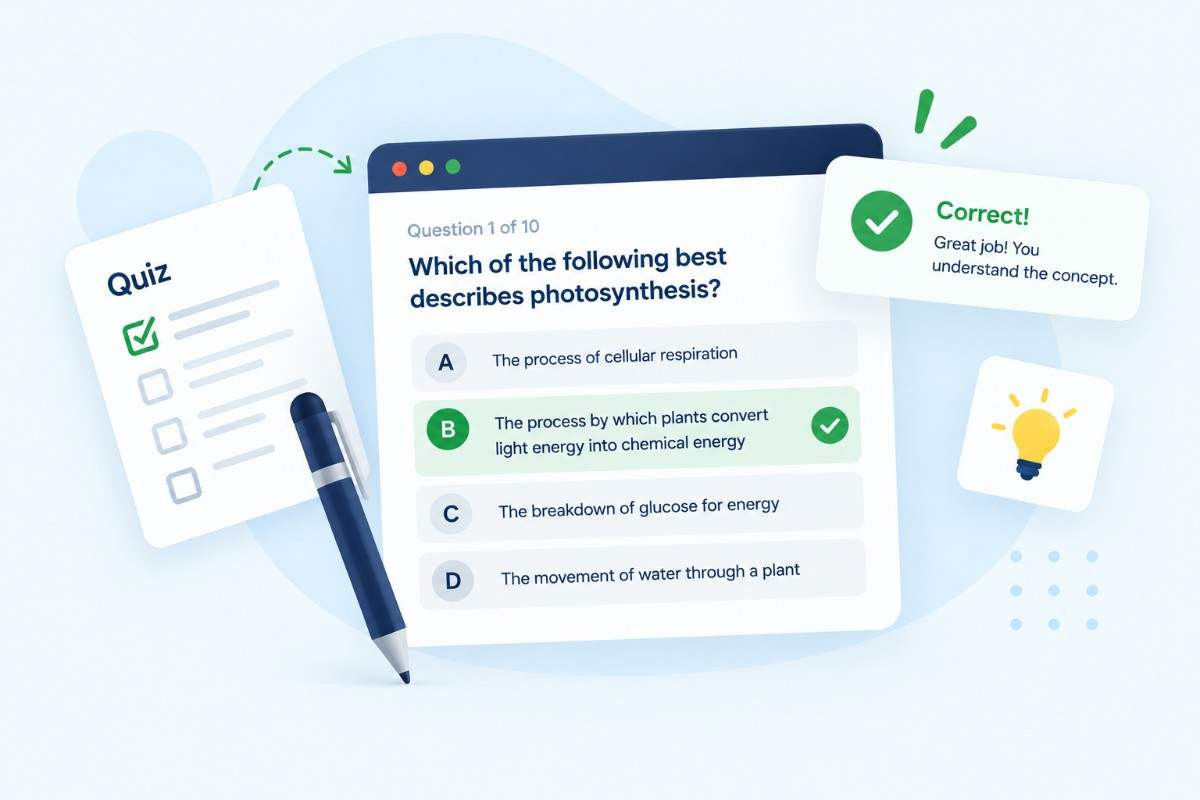
Multiple-Choice Quizzes
Generate clear questions, plausible distractors, answer keys, and explanations for knowledge checks and graded quizzes.
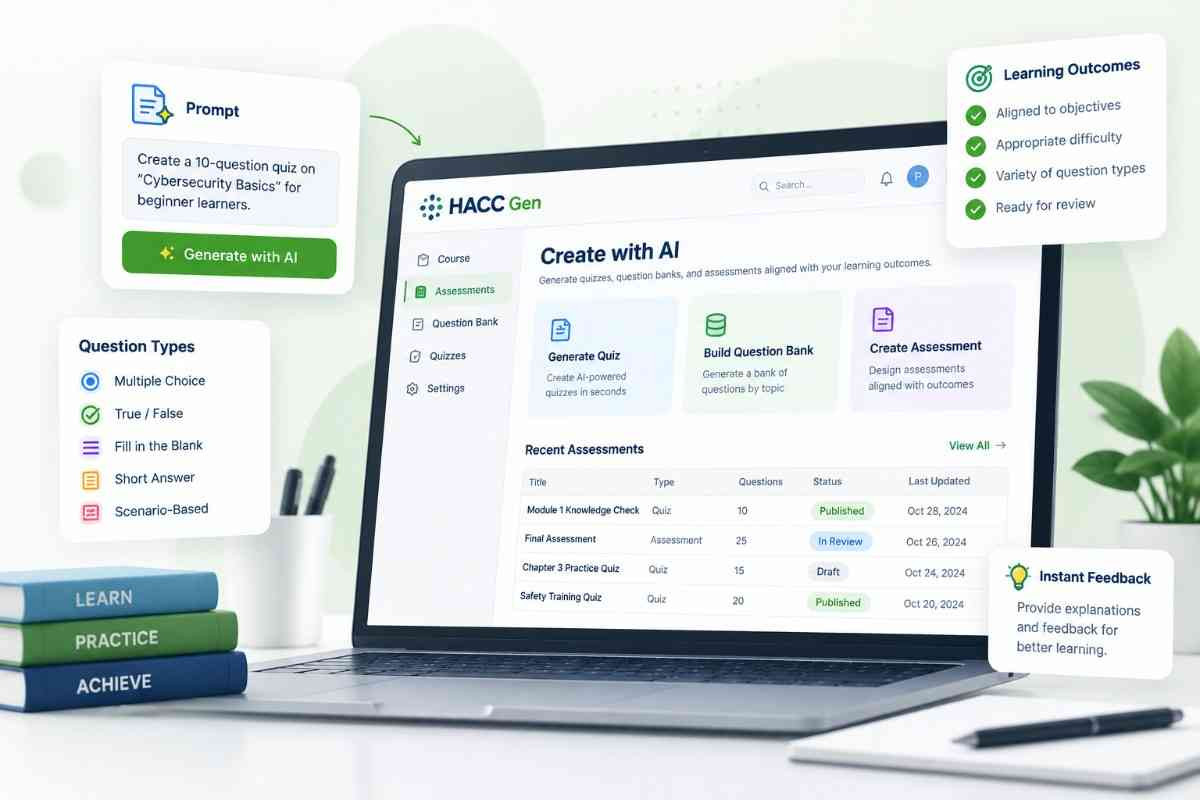
Generate meaningful quizzes, question banks, practice activities, and assessments aligned with your course learning outcomes.
HACC Gen helps faculty, instructional designers, and learning teams create assessment content faster while maintaining academic quality, instructional alignment, appropriate difficulty, and meaningful feedback for learners.
Effective assessments do more than test whether learners remember information. They help educators understand how learners apply knowledge, analyze problems, demonstrate skills, and achieve course outcomes.
HACC Gen supports the assessment design process by helping teams create relevant questions, vary difficulty, connect questions to objectives, and develop useful feedback for learners.
Connect each question or assessment task to the knowledge, skill, or competency learners are expected to demonstrate.
Generate first drafts of quizzes, question banks, rubrics, scenarios, and practice activities more efficiently.
Create questions that range from recall and comprehension to application, analysis, evaluation, and problem solving.
Draft explanations and feedback that help learners understand mistakes and improve their performance.
Use AI assistance to develop different types of assessment experiences based on your subject, learner level, course outcomes, and delivery format.
Generate clear questions, plausible distractors, answer keys, and explanations for knowledge checks and graded quizzes.
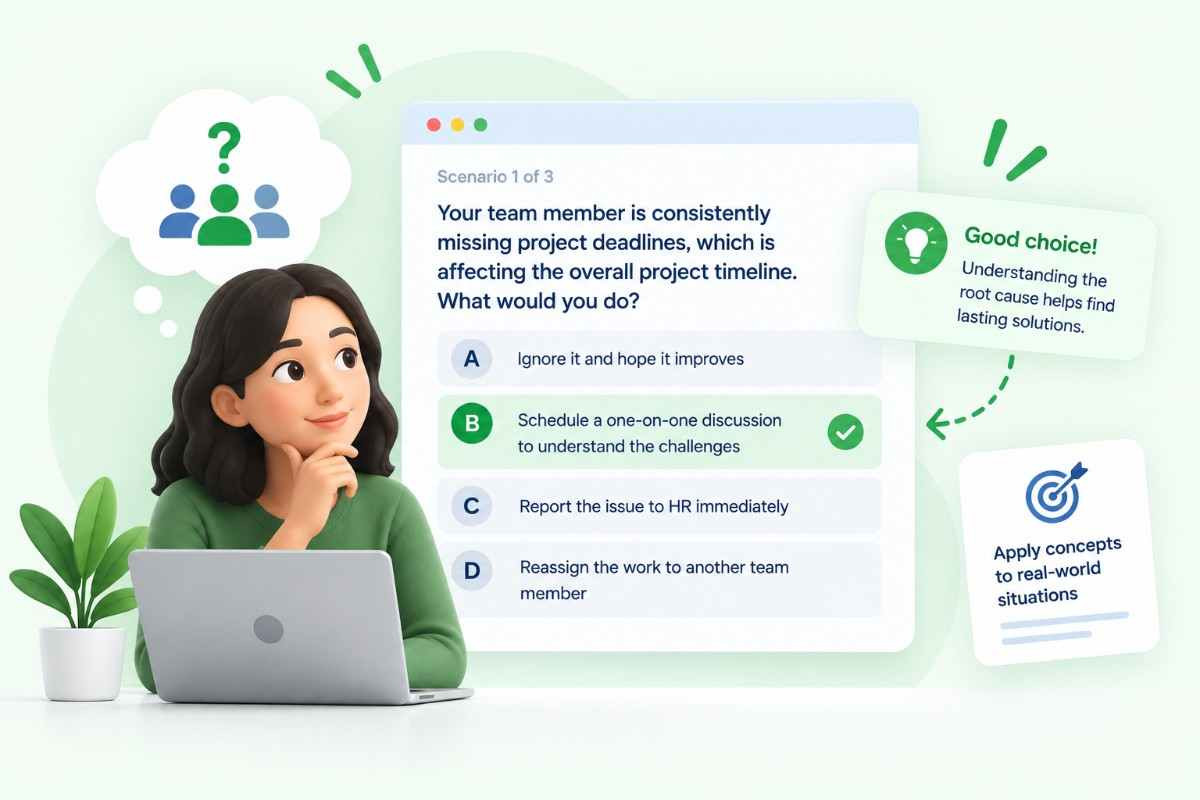
Create realistic situations that ask learners to apply concepts, make decisions, and solve discipline-specific problems.
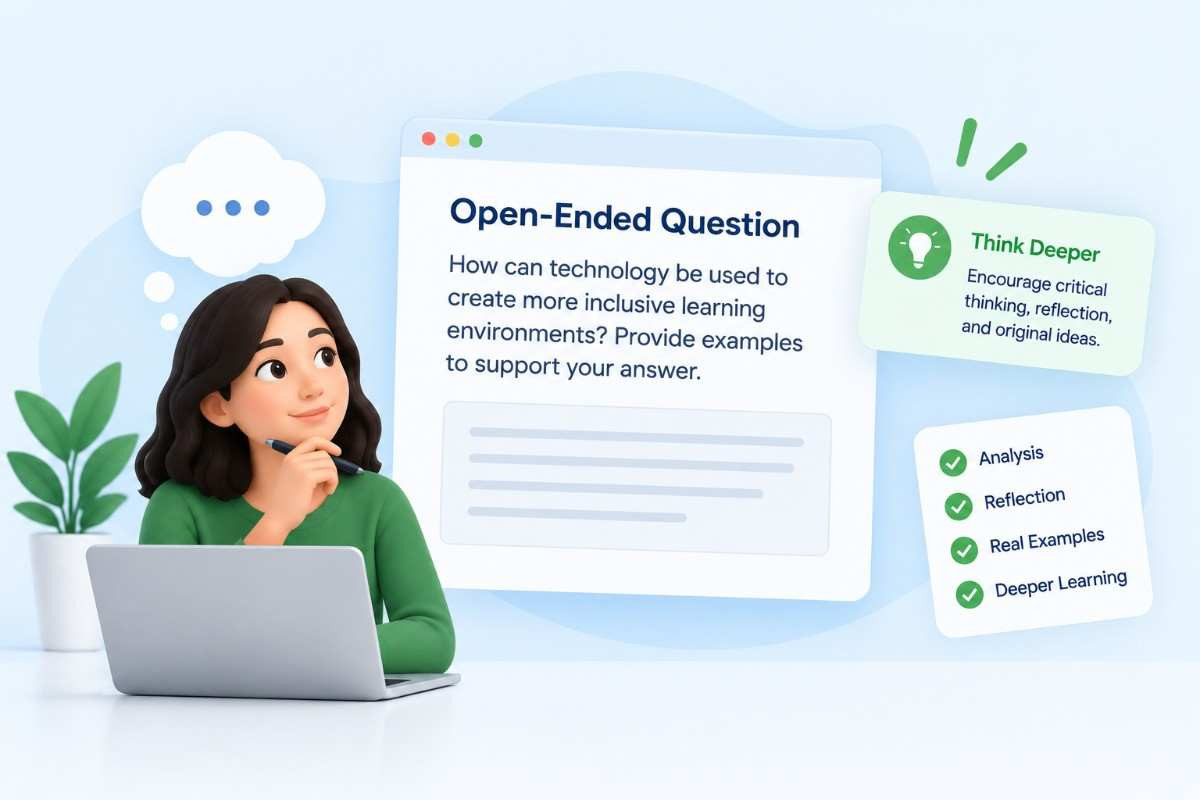
Draft short-answer, reflection, discussion, and extended-response prompts that encourage explanation and critical thinking.
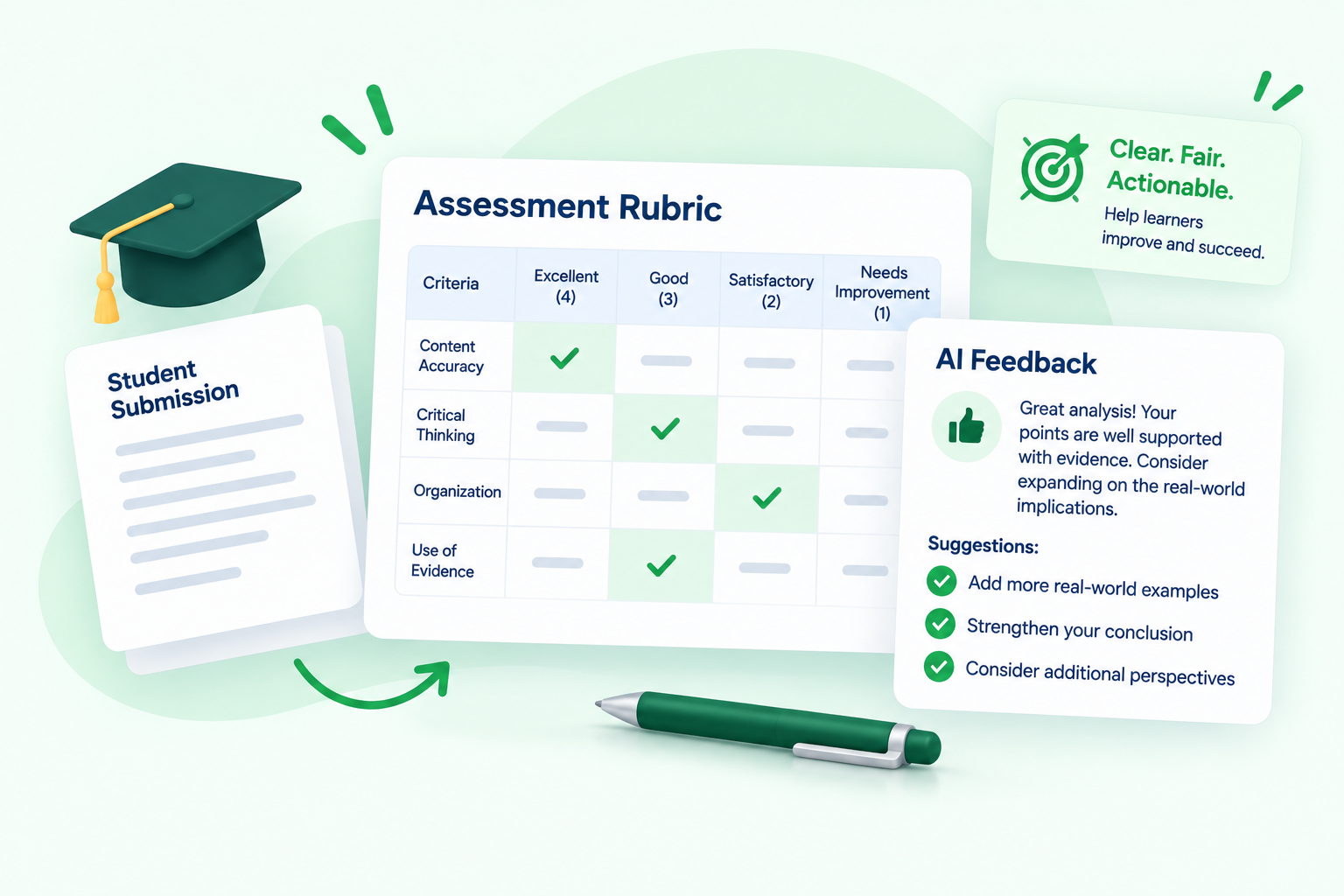
Develop evaluation criteria, performance descriptions, grading guides, and feedback statements for learner submissions.
HACC Gen helps you create assessment drafts from course content, learning objectives, instructional materials, and assessment requirements. Refine the output to match your academic standards and teaching approach.
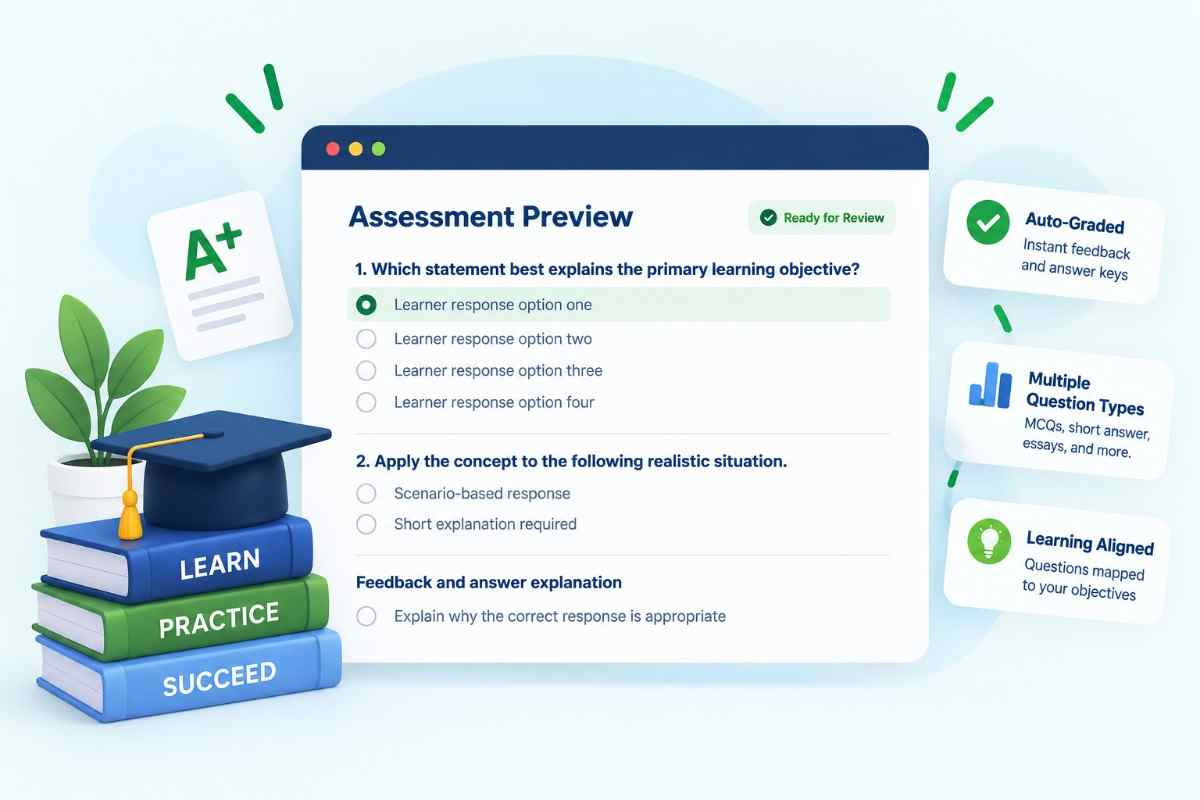
Use a structured process to create assessment content that is relevant, aligned, appropriately challenging, and ready for faculty or instructional design review.
Select course materials, topics, modules, or learning resources.
Identify the learning objectives or competencies being assessed.
Create questions, answer keys, feedback, and assessment drafts.
Adjust wording, difficulty, question types, and assessment format.
Validate accuracy, fairness, alignment, and academic quality.
Create assessment components that support preparation, practice, feedback, evaluation, and evidence of achievement throughout the course.
AI-generated assessments should always be reviewed by faculty, subject-matter experts, and instructional designers. Human review ensures that every question is accurate, fair, relevant, and aligned with the intended learning outcomes.
Check the correctness of questions and answers, remove ambiguity, validate distractors, review cultural or disciplinary bias, and confirm that the assessment measures the intended knowledge or skill.
Refine explanations and feedback so learners understand why an answer is correct, why an alternative is incorrect, and what they should review or practice next.
Learn how AI-assisted assessment creation can support quizzes, question banks, feedback, and outcome-aligned evaluation.
Accelerate assessment development while keeping academic expertise, instructional alignment, and human review at the center of every assessment decision.